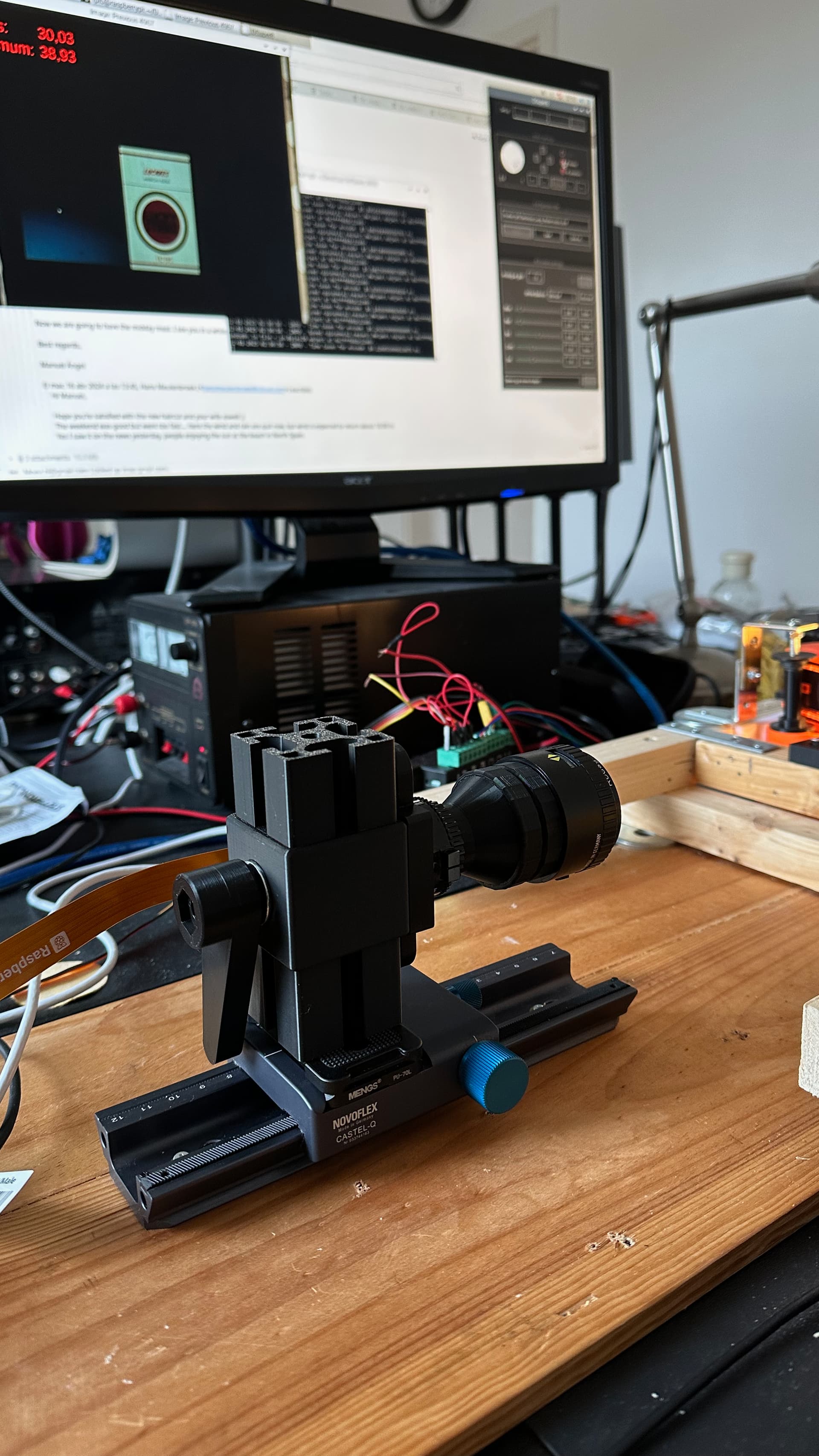
And this is the vertical slider that I made, based on a 40x40 profile, looks much more steady than where I started with
4 Likes
And added a 3D printed lens tube to avoid picking up unwanted light from the surrounding
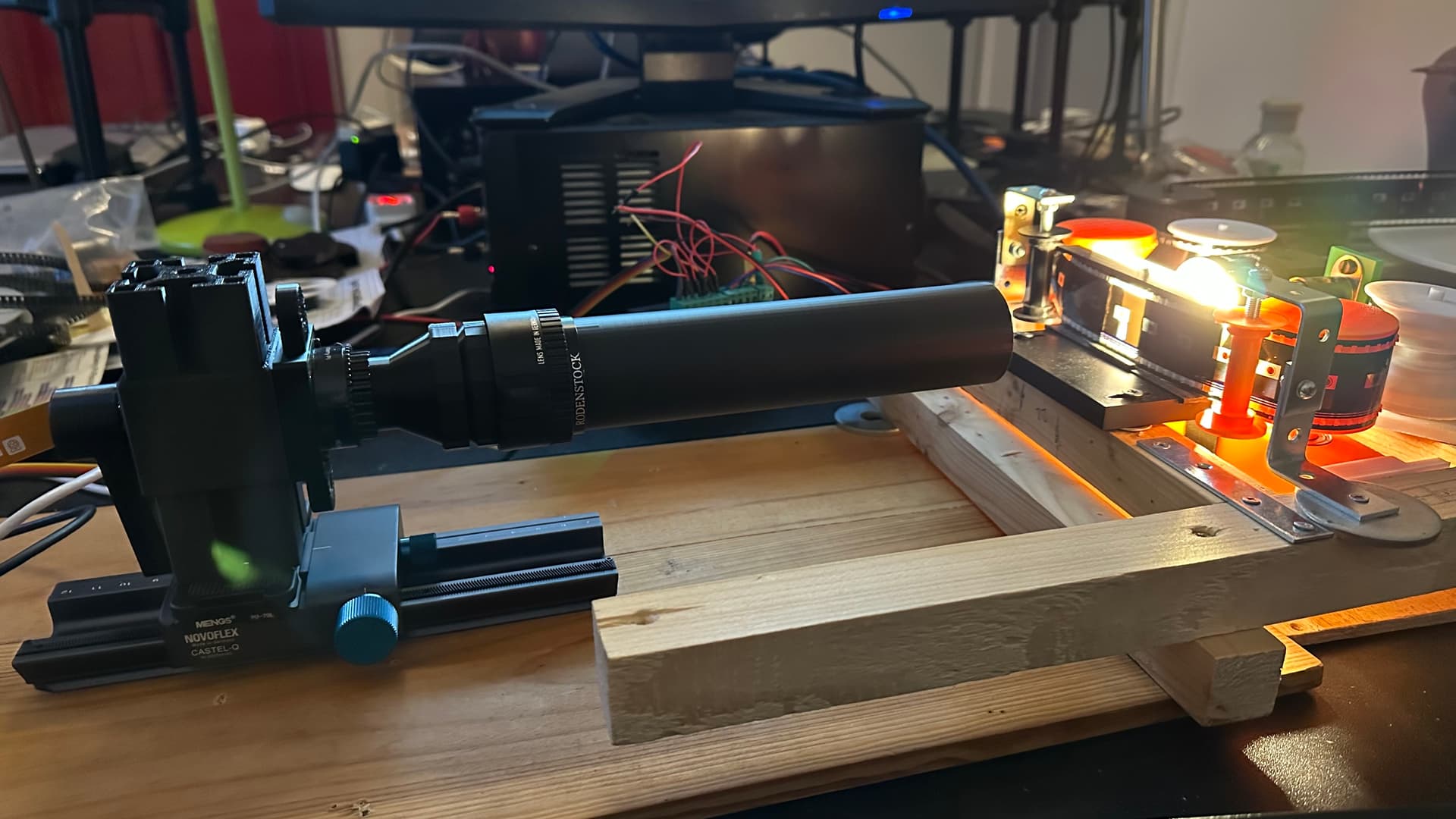
also slightly changed the position of the diffuser and the lamp (both closer to the filmgate). Tested the vertical slider some more… now need to think and tinker how to replace the wooden frame by an 30x30 (3D printed) frame.
Very nice work on the camera mount.
Consider building a tube-hood providing some gap for the lens to float in, and affixed near the film side (instead of the lens itself). It will avoid the additional arm from the tube-hood weight on the lens mount.
Even for light weight PLA, a long arm on the sensor can enhance vibrations.
Here is what I built for 8mm.
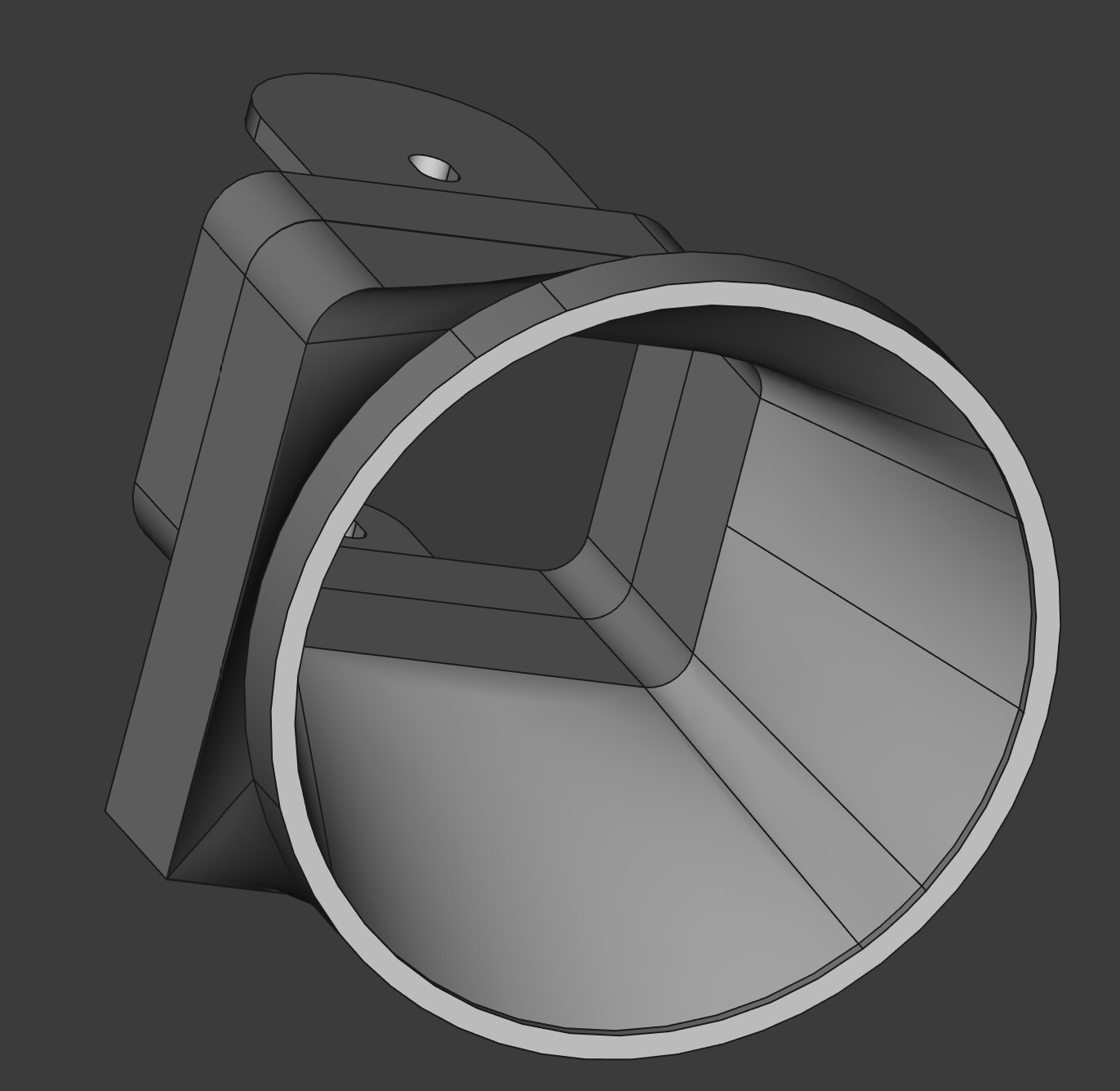
A Tube slides on that providing cover for the lens inside the hood.
3 Likes
Thanks @PM490 Pablo, I started with some metal tubes but they were too heavy and made it instable. The PLA (matte black) was better but I will try to implement your suggestion. Compliments for your nice and compact setup!
1 Like
The Canon EF lenses have an electronically controlled aperture. Lacking an control inputs, I believe they default to maximum aperture, even if you have “stopped” down the lens via the aperture ring on the lens. Back in 2000 or thereabouts, I was machining Canon EF mounts for Foveon sensors. We did the mount, the bayonet ring (the ring that the lens mates to) and the bayonet spring. There had to be an internal plastic part with spring contacts and wiring, to mate up with the contacts on the lens.
You can set the aperture wirh a Canon camera and then remove the lens keeping the aperture setting. Not practical, but works 