Here’s a collection of examples to show you what you can expect:
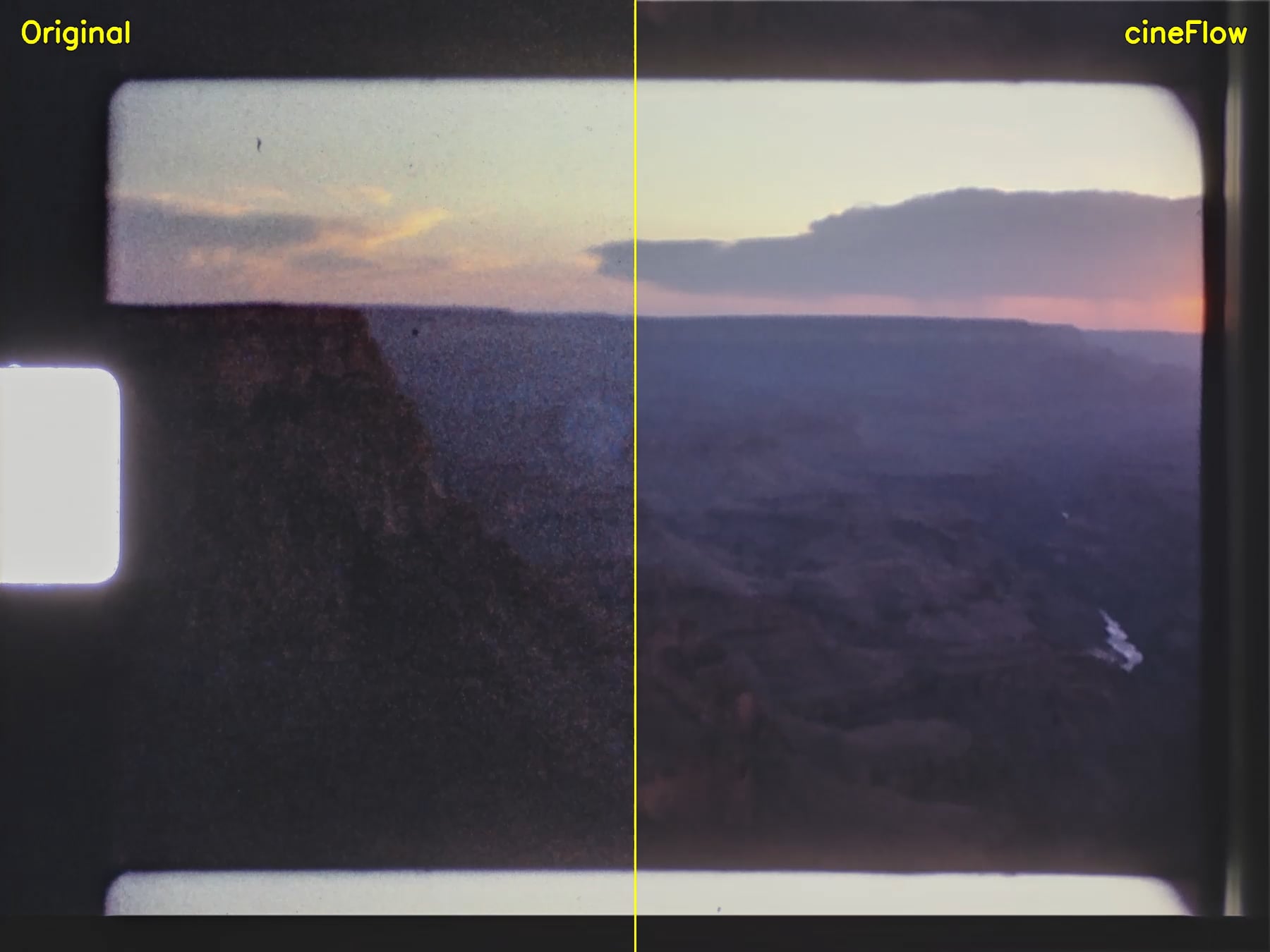
Left: raw scan. Right: processed.
- Grand Canyon — heavy noise in the shadows. Two factors combine here: the K25 latent image sat for over a year before development, and the scene itself has a very high contrast range.
- Fast Birds — many small, fast-moving objects against an almost textureless background. Notoriously difficult material: averaging over time without tracking the motion properly gives you smearing or double contours.
- Yellowstone — fast-moving diffuse objects (a waterfall) and transparent spray. Image content that strictly speaking has no unambiguous correspondence between two frames at all.
- Las Vegas — wide contrast range and rapidly changing lights. Not an easy one.
- Rooftops Seattle — a different film stock: Ektachrome, nicely faded over the years. Different emulsion, different grain.
All footage is Super-8, scanned including the perforation and frame edges — nothing cropped or cleaned up beforehand.
A note added: the sections listed above use different parameter sets, optimized via the GUI flowQt for the material at hand. All scenes within a section use the same settings.