David, thanks again for sharing your capture. Please note that some of the source images in the set are slightly shifted. Did my best for recentering by shifting in resolve. The same set is used for both color blends.
I also noticed that in the Red LED capture, if I am not mistaken, it looks like there was light bleeding particularly noticeable in the upper right corner. Normally I would have preferred to use this as the main channel, but because of the bleeding shifted the weight to other LEDs. Not sure if the bleeding is in the film or was an issue at capture.
3 LED MIX
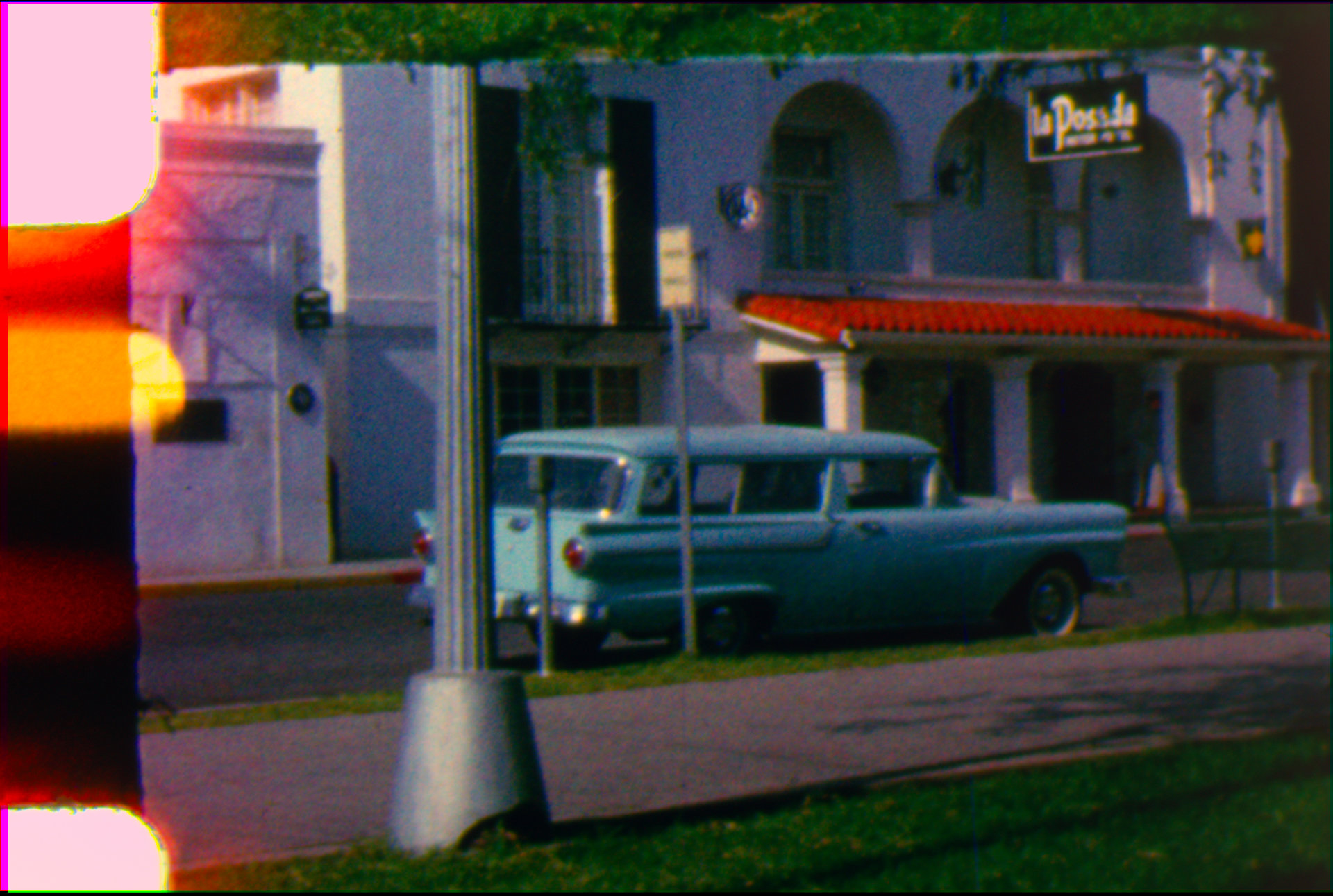
10 LED MIX
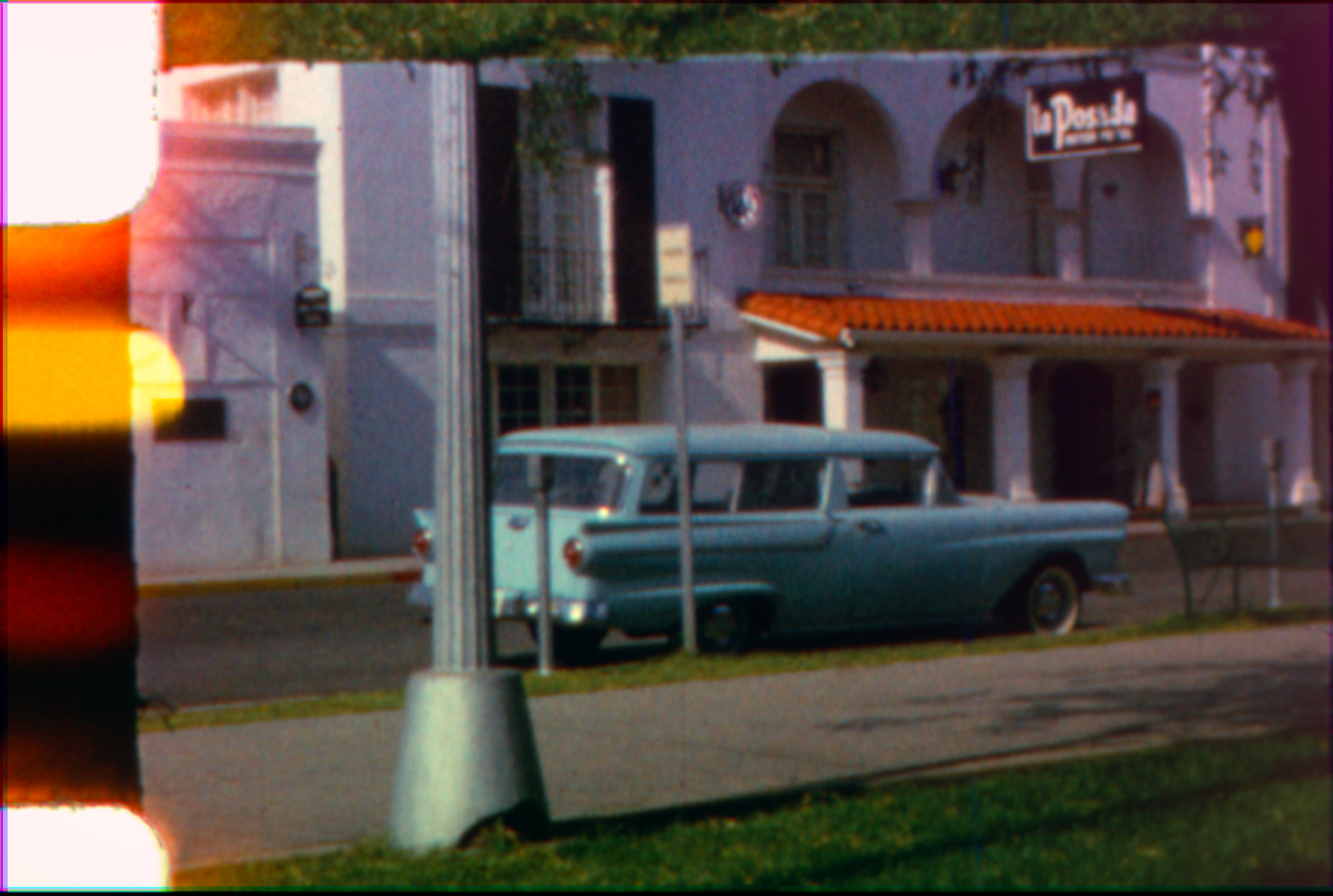
From these experiments, the 3 LED combination produces well separated colors with sharp transitions. But for my taste these look a bit harsh, almost like the film was colorized.
Working with a combination of more than 3 LEDs (10 in the test above) additional color details/transitions are evident. For example, in the base of the lamp post, there is green reflections, changing the metal color slightly between the base and the post. Those are completely gone in the 3 LED RGB only mix. The same can be seen on the sprocket hole red cast. The fading produced on the image has subtle color transitions on the 10 LED vs a much harsher transition from light yellow to pink on the 3 LED.
My initial conclusion is that multispectral is a valuable tool, which combines color separation of narrow band and color definition of wider band.
David, your captures no doubt are a motivation to work on the PCBs and complete the work on my scanner to add multi-band capture.