Yes I tried to make the simpliest possible because of my own (in)capabilities in electronics, programming and diy…
I just used this kind of 1€ sensor (I don’t know it’s name in english, in french it’s called “fourche optique”):
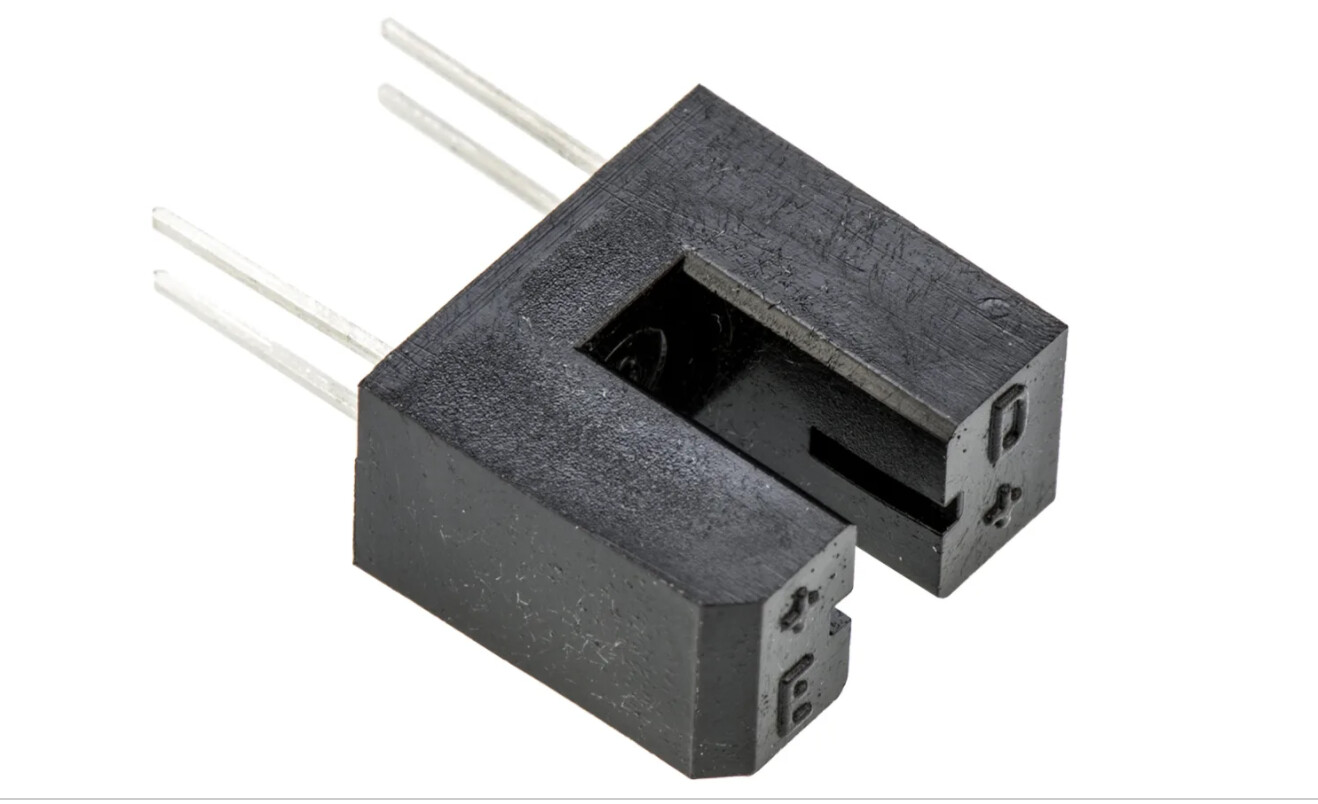
I plugged it’s sensor output in the A0 analog input of my arduino, and do a serial plotter to find the threshold between the hole and the film… Then I adjust in my code (it take 1mn in all)… The stepper moves the film, when the sensor detect the hole, the motor stop, the arduino send a signal to my Rasp PI via USB and the HQ cam shot. Then after 2s the motor goes on again (under 2s I’ve found some bluried images, I think the camera or the saving of the images are slow so with 3400 images, sometimes it’s too quick…I wish it could be faster but I have no idea.. perhaps to link the Rasp Pi and Arduino via GPIO is better and faster than via USB. If someone knows I would be happy to know  ), make some steps (40) ignoring the sensor (because there will be 1mm hole that the sensor still read) and then again in the loop.
It works perfectly with B&W positives as the side is totally black and the sensor has no problem to discern hole and the film . With negatives (with clear side), it depends of the quality of my processing, but when everything is regular, it works great. That’s why I’m waiting for a laser to try the reflective method as I’m processing everything by hand and with some very expired films
Cheers