Thanks for your responses both Roland and Andriy. For the moment I’m trying with leds and phototransistor while I wait for an Keyence FU-21X with a F-2HA focusing lens that I did find in Aliexpress. It’s supposed to give me a .15 mm spot.
You can also check these out on AliExpress.
I just found this on AliExpress: https://a.aliexpress.com/_ExmdZEE
I just found this on AliExpress: https://a.aliexpress.com/_Exy9bS2
Tendeur sur rail MGM9 avc ressort caché.stl (3.2 MB)
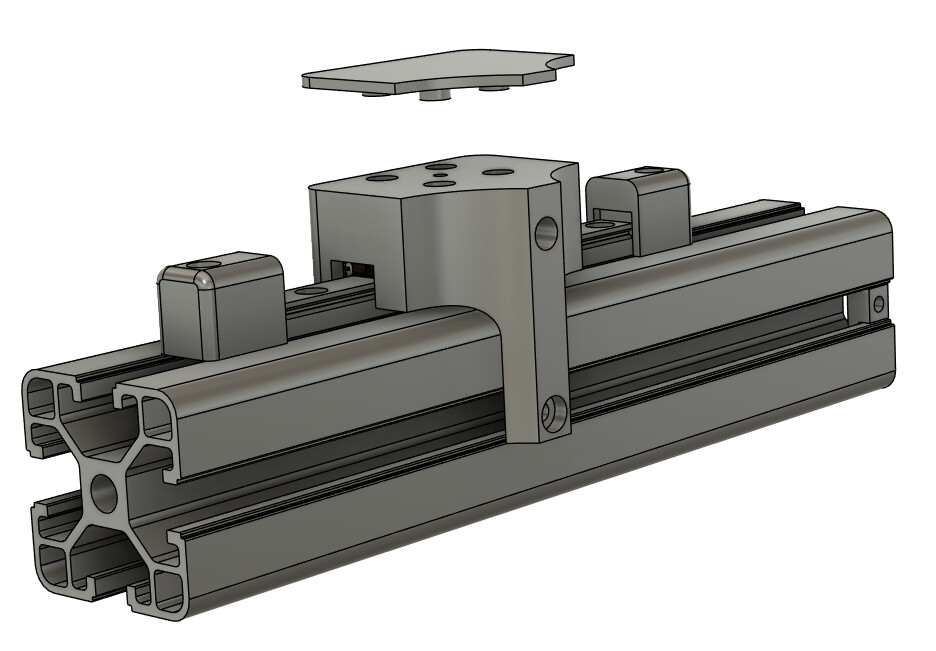
Not shown here (I tend to get a little lazy when I think I’m only making something for myself):
-
The spring housed in the rear groove of the extrusion
-
The shaft supporting the guide roller
-
The clamping inserts inside the 4040 aluminium extrusion
I only use this tensioner with large or heavy reels, as it helps absorb sudden jerks while the reel is being pulled.
It is unnecessary for Super 8 reels up to 180 metres.
1 Like
Thank you for the print files. Could we also get a photo of the back, where the spring is located?
The image shows the back of the part; the spring (not shown) is concealed within this groove. On the moving part, a screw passes through the spring’s loop, while the other end of the spring is held by the insulated part on the right.
1 Like
@roland So, I have a question on film gate limitation and if it occurs in your experience. I’ve noticed that when working with Super16 and Super8 films (when film is exposed all the way to the border) I’m losing right edge of a frame due to grove depth. You can see how RGB lights are reflected on the left, which is a culprit of using separate wavelengths source, but it’s a perforation area and it’s not critical. But the right side loses edge significantly. Of course it can’t be fixed, just wondering if you’re facing such problems. Thx.
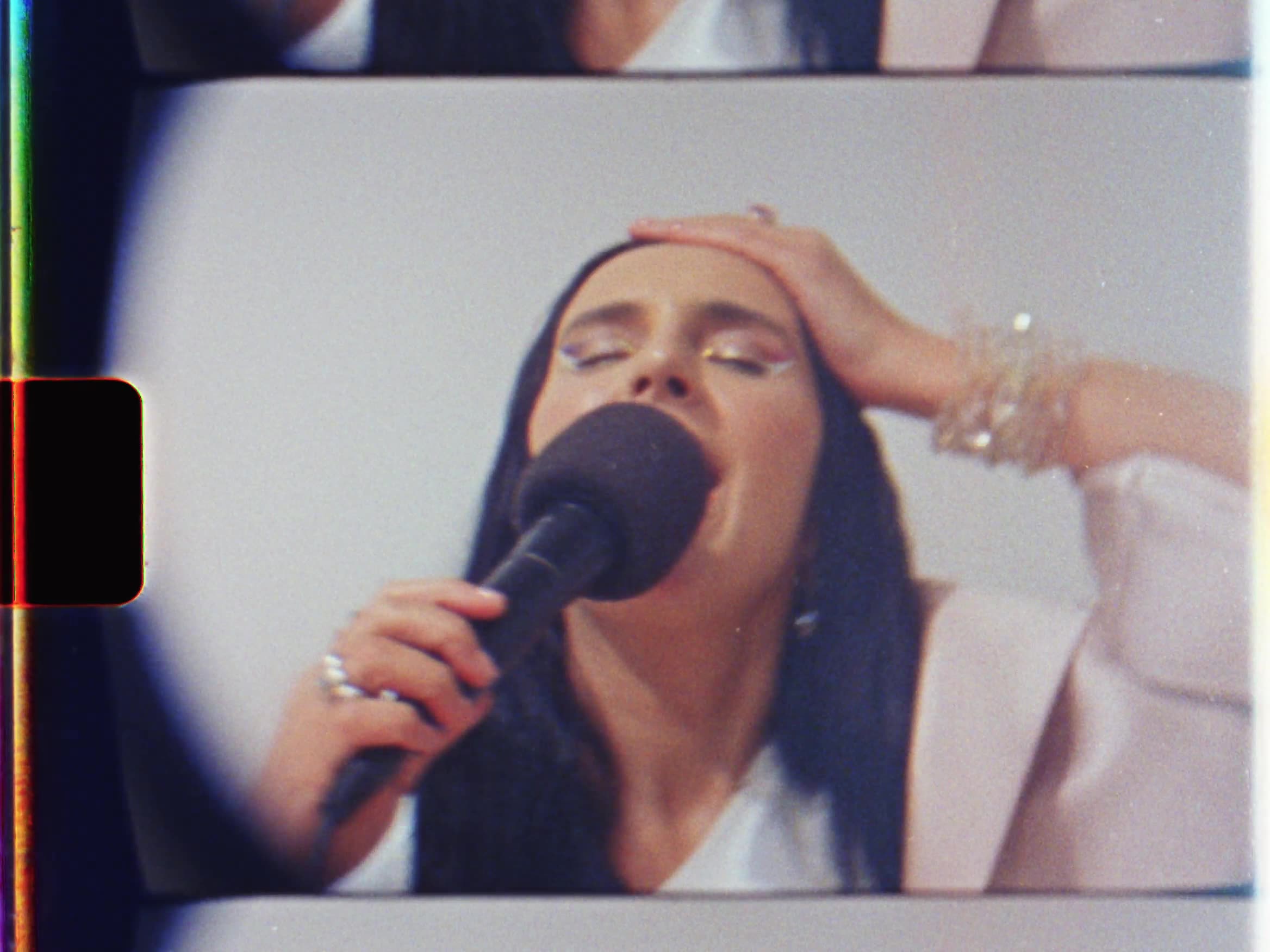
To the best of my knowledge, no film format uses an image that extends all the way to the edge of the film. This is probably because the film still needs to be supported and guided inside the camera along the edge opposite the perforations.
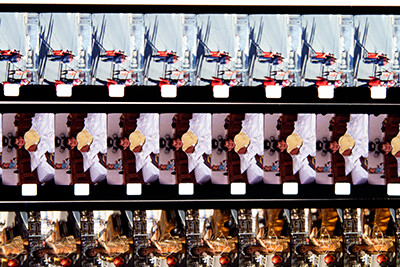
In Super 8, an area was also reserved for the optional magnetic sound stripe. Even on silent films, this border was therefore left unused. Projectors also masked this part of the frame so that the magnetic stripe would not be visible when screening a sound film.
I checked three Super 8 films from different sources, and all three have a border. That said, I am not an encyclopedia and have certainly not seen every type of film.
To reduce this border as much as possible on my scanner, I ground and sanded down the guide rail. Only a very shallow guiding groove remains, which is sufficient to hold the film correctly.
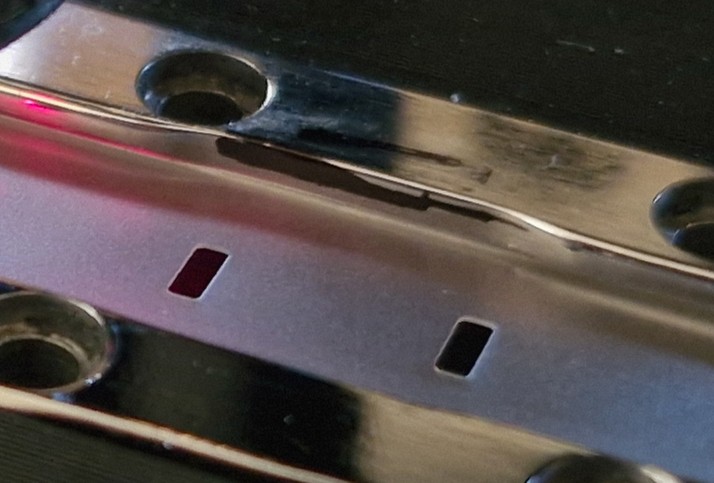
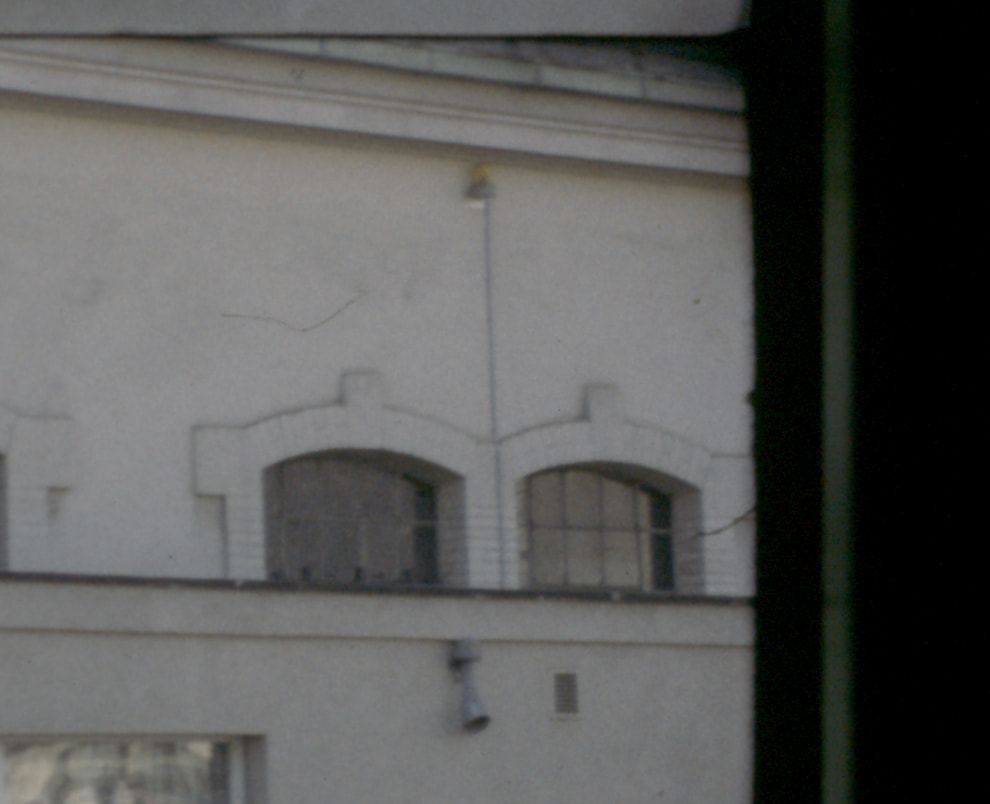
If the guide rail creates reflections, I apply permanent black marker to its shiny metal surface. A cleaner solution would probably be to use matte black paint. In any case, the reflection only affects the extreme edge of the frame and does not extend into the useful image area.
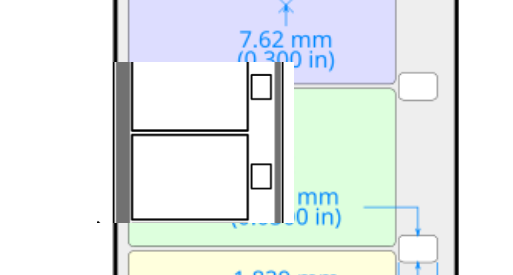
It’s been awhile since I posted the dimensions of Super-8 film stock (link). Pretty sure now that these are the correct dimensions. The dims of magnetic sound stripes are also included.
There were two stripes for stereo work. Normal S-8 was silent and the magnetic stripes would be applied later if desired.
There are two S-8 frames with slightly different dims and placements. The larger camera frame and the smaller projector frame. In the old days, the audience never saw all that was recorded on the film.
Note: neither cameras nor projectors did follow the specs too closely.
I’m talking about Super16 framing of 16mm film. As you can see perforation side is relatively wide, while the opposite side is thin as hell. It’s even thinner then opposite side of Super8 film and in my case the grove is too deep to accommodate frame edge onto sensor. Surely it can be a slight alignment issue of mine, but still, pushes me towards different gate structure.
I will try to sand the central part as @Roland though. Mine was sanded initially, but not to such extent.
Hello there,
im Planning on building one of these units myself in the future, but I have some questions to @Roland and @Andriy_But
Whats the max reel capacity with the 100mm arms? I plan on Scanning whole Feature Films in 16 and 35mm, so that means up to 38cm in Diameter and a substantial amount of weight on the machine.
For Light Andriy: Have you got a solution for RGB for 35mm? My main concern is diffusion, since that wasnt great on the scanlight either for 35mm. Also those RGB Leds seem very small in regards to power. Is it really enough? Since ill be running in stop motion mode, ill want to keep exposure times short to reduce artifacts from vibration.
Hope you can help
Not really a big difference.
The guide groove I ground and then polished is only a few tenths of a millimetre deep. That is enough to guide the film without encroaching on the image. Give it a try: take a photo of your grinding work and share your feedback.
Starting again from scratch for such a small adjustment would be a bit of a shame. We are often tempted by more complex solutions, thinking we will gain something from them, but that is not always the case.
In the end, what matters is what I can recover on screen and actually appreciate.
By the way, it is quite amusing: I have just noticed that MWA scanners — and they are certainly not amateurs — do not use capstans. It just goes to show that keeping things simple does not necessarily mean doing them less well.
Diameter is not really an issue; you have some room to spare. The weight, however, is something to watch carefully.
35 mm reels can be very heavy, and the mounting system would probably not withstand excessively large reel diameters. Do not try to fit a 38 cm reel: you could damage the mount or the mechanism.
For the lighting, if I may offer a small piece of advice: keep it simple and powerful. Cinema projectors did not have RGB LEDs.
I’ll try to shape it and will tell you about improvements in design.
Regarding MWA — they are one of the oldest names in film restoration and their last assembly Lumiere built for Silbersalz Lab is gorgeous - LUMIERE — SILBERSALZ CINELAB Berlin - Home Of Motion Picture
I’m not really sure how they solved (and if they actually solved) the shuttle and seeking for specific frames. To me it seems hardly achievable with direct drive approach. But again, maybe it’s not even an issue.
@Bino08 Narrow band lights are much dimmer and require more punch to reach sufficient exposure. What I’m doing right now is overdriving 500% and it seems to be enough latitude with most films. Haven’t tested 35mm though. Once I do that I’ll report here.
1 Like